
In the age of social media, celebrities like Kim Kardashian wield enormous influence. They literally shape culture and consumption, yet bear no responsibility.
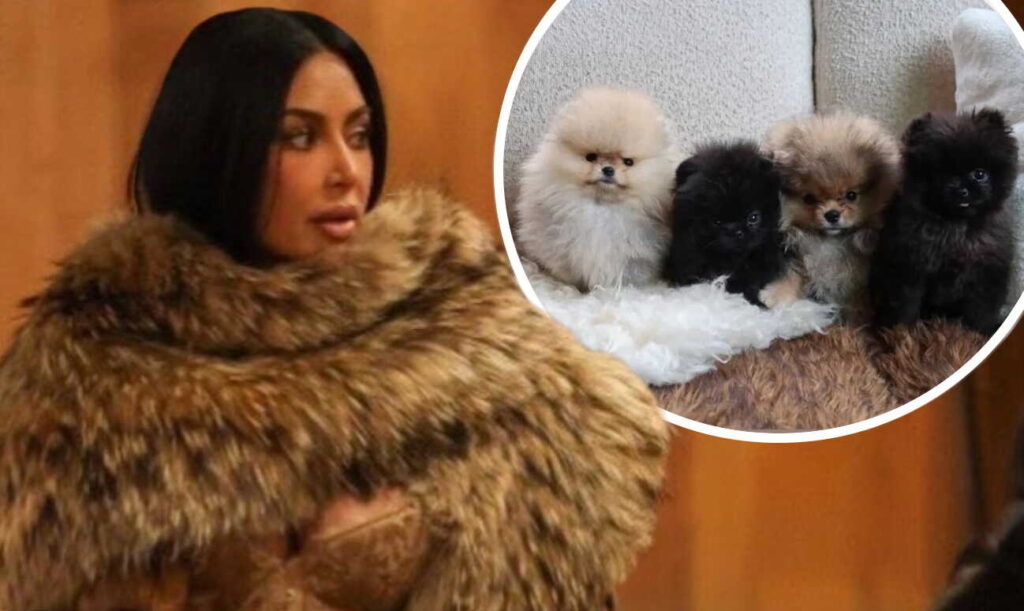
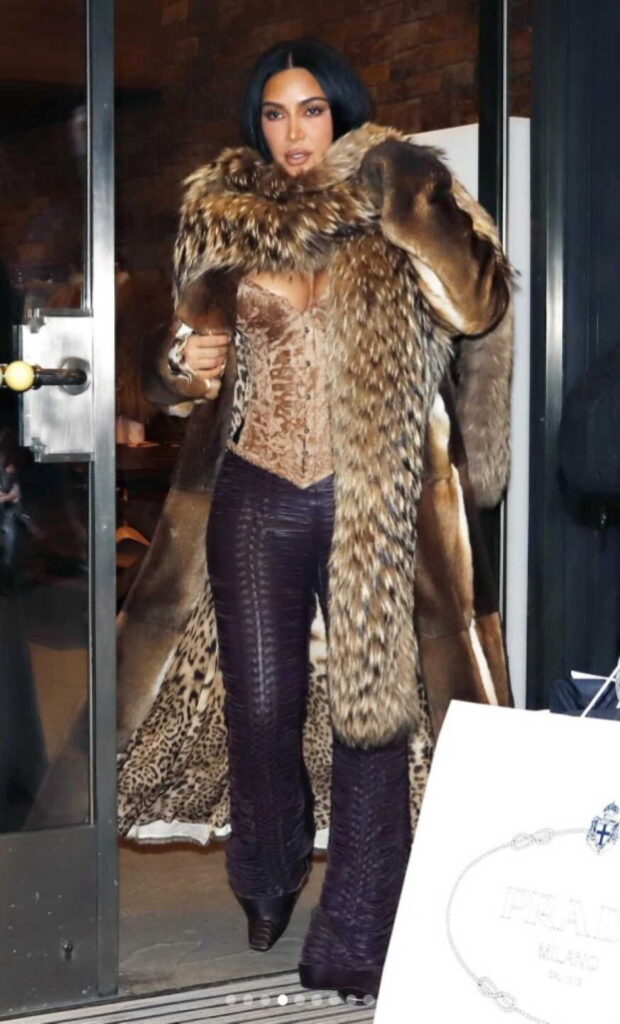
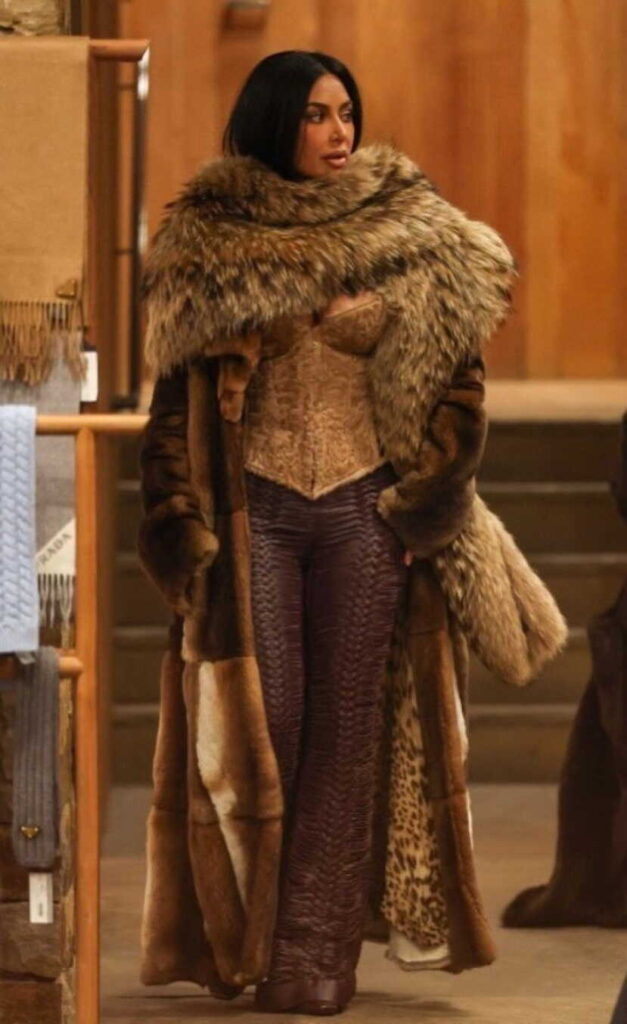
Discussions about Kim Kardashian giving her children puppies for Christmas and appearing in public wearing a $7,500 fur coat after PETA’s negative reaction became a topic not only in blogs but also in news services, showing that the reaction went beyond private discussions and was noticeable in the media space.
When Kim appears wearing a fur coat, it is no longer just a story about fashion. And it’s not just about animal welfare either. It’s a story about “power” — and about how society tries to control those who wield that “power” without having any mandate to do so.
No one elected Kim Kardashian. She does not hold public office, vote on laws, or make political decisions. But at the same time, her influence — cultural, economic — is quite comparable to that of the institutions we are accustomed to considering “real” power.
Millions of people follow her life, copy her style, buy the products she promotes, and — consciously or not — adopt the values she conveys.
This is the main paradox of modern celebrities: they wield a kind of “power”, but bear no responsibility for its use.
Influence without rules
In a democratic society, power is usually accompanied by rules. Politicians can be voted out of office. Companies can be regulated. Judges can be criticized and restricted by law. But what to do with people whose influence is built not through institutions, but through attention?
Kim Kardashian is not the result of a seizure of power or the outcome of a political struggle. She is a product of the attention market. Society itself, step by step, like by like, has turned her into a global figure. And now that same society demands that she behave in accordance with moral standards that previously applied mainly to politicians and officials.
We expect celebrities to behave “responsibly,” but we don’t fully understand to whom exactly they should be accountable and according to what rules.
PETA’s criticism of Kardashian is not so much an attempt to change her personal habits as it is a symbolic gesture. The message is crystal clear: if you have influence, you can no longer afford to be neutral. Even “personal choice” ceases to be personal when millions are watching.

Social media amplifies this effect. It turns morality into a public spectacle. Condemnation becomes widespread, loud, and emotional. Shame in this system is a kind of sanction. It is the only sanction available against people who cannot be fired, fined, or removed from office.
But there is a dark side to this approach
The demand for accountability seems reasonable in itself. If your actions affect millions, you cannot completely ignore the consequences. But the problem begins when accountability ceases to have clear boundaries and turns into moral coercion.
Read also: The Kevin Spacey Case: When Allegations Feel Like a Verdict
Who decides what values a celebrity should share? Where do public expectations end and ideological pressure begin? And what happens if an influential person simply disagrees?
In the case of Kim Kardashian, it is not a matter of breaking the law. She is being condemned not for any specific harm, but for a symbol. Fur in this story is not just an item of clothing, but a sign. For some, it means cruelty and irresponsible consumption, for others, luxury or personal style. The condemnation is directed not so much at the action as at its interpretation.
The problem is that symbols are never unambiguous. When society begins to demand “correct” symbols, the space for personal choice rapidly shrinks.
Why is the anger directed at her specifically?
We live in a world where the real centers of power — corporations, algorithms, global markets — are often out of reach. It is difficult to argue with them, difficult to personalize them. Celebrities, on the other hand, are always in the spotlight. They are understandable, recognizable, and emotionally close. It is easier to condemn them than abstract systems.
Kim Kardashian is also an easy target because she embodies several painful issues at once: extreme wealth in an era of inequality, conspicuous consumption against the backdrop of climate anxiety, and the transformation of a personal brand into a form of power. By criticizing her, society is actually trying to come to terms with its own fears and contradictions.
The story of Kardashian and PETA raises a broader question: how can we talk about power outside of politics?
It is clear that celebrities do influence society and cannot completely ignore the consequences of their actions. Every gesture of a public figure becomes a test of ideological correctness; real responsibility is replaced by symbolic responsibility.
We ourselves have given Kardashian influence — and now we don’t quite understand how to deal with that influence. We demand accountability, but we cannot offer clear rules. We use criticism as a tool of control with Kim or any other figure who finds themselves in the public eye because we simply have no other tools.
This content reflects the author’s opinion.