
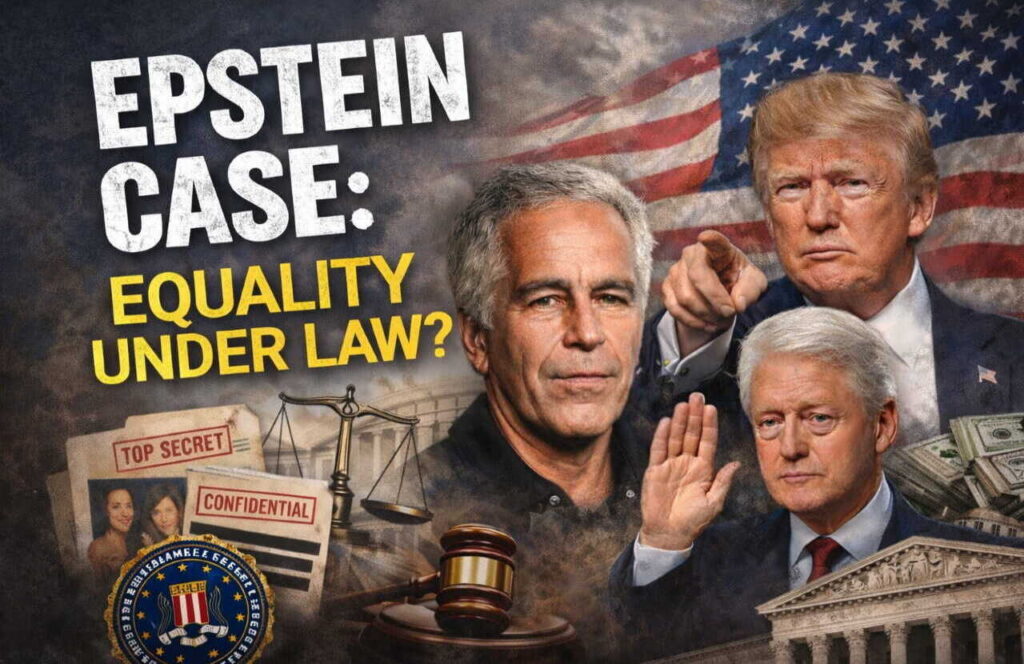
The story of how the Department of Justice initially concealed part of the Jeffrey Epstein case file containing allegations against Donald Trump, as well as former President Bill Clinton’s recent testimony, is prompting people around the world to ask the same question: Are all people truly equal before the law in America?
When observing scandalous investigations in the US, it is easy to fall into extremes. Either idealize the United States as a country of rule of law and transparent institutions, or, conversely, see every scandal as confirmation of cynicism and double standards in the American justice system.
It would be difficult to find anyone who has not heard at least something about the scandalous financier Jeffrey Epstein, who once had connections at the highest levels.
His plane, dubbed the “Lolita Express” by the media, carried politicians, billionaires, and celebrities. Among them was the 42nd President of the United States, Bill Clinton. In his published testimony, he reiterated that he was unaware of the financier’s crimes and had no idea what was going on. He confirmed that during one of the flights, he had a neck massage because of a spasm: ‘I thought they were flight attendants’.
Don’t you find it funny to read something like that?
Interestingly, the video of the testimony Clinton captured a curious moment when Clinton stared at the footage from Epstein’s island. The ex-president’s lawyer tried several times to take the documents away from him, but he returned them, looked at them, and smiled.
It seemed as if 79-year-old Bill Clinton was reminiscing about pleasant memories while looking at the footage from Epstein’s island during his testimony to Congress. The lawyer was unable to save the situation — draw your own conclusions, as they say.
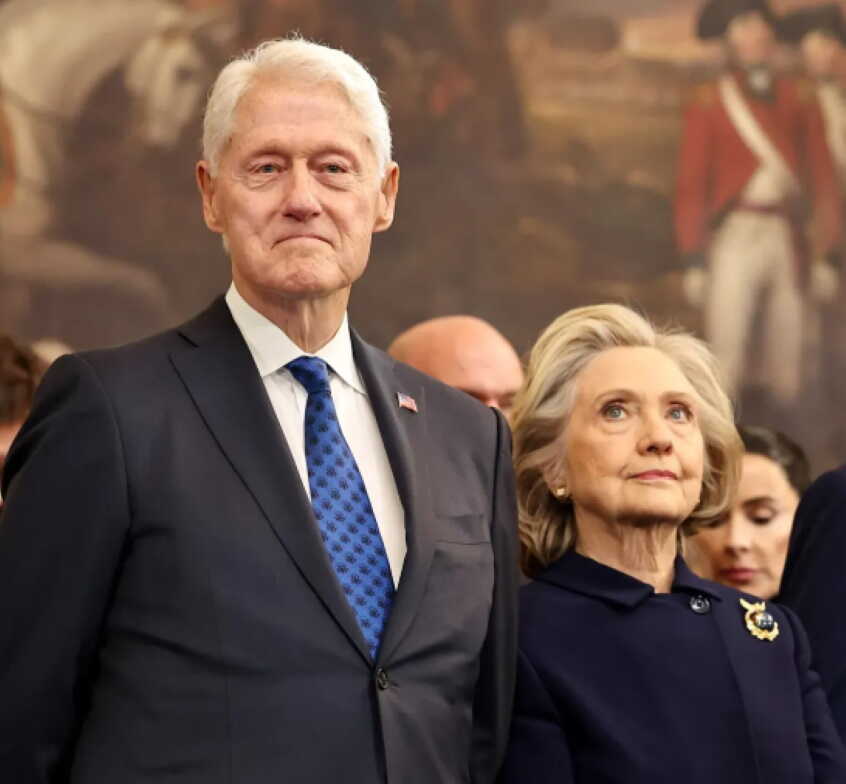
His testimony is flawless: the former US president denied under oath that he knew about any illegal activities on the part of Epstein. He said he hoped that his participation in the investigation would “help prevent similar cases in the future.”
Funny, isn’t it?
The billionaire pedophile maintained close ties with some of the most influential people in the world for many years. He was convicted, released, and then became the subject of another investigation. His network of contacts was staggering in its scope.
Recently, as the case files are gradually being released, a new disturbing detail has emerged — reports that some files related to Donald Trump have somehow become unavailable in the published documents.
“How is that even possible?”, you may ask.
Even if we assume that there is a procedural or technical explanation for this, the very possibility of such a situation undermines trust.
Soon, the U.S. Department of Justice released documents that contain notes from interviews the FBI conducted with a woman who alleged she was abused by Donald Trump.
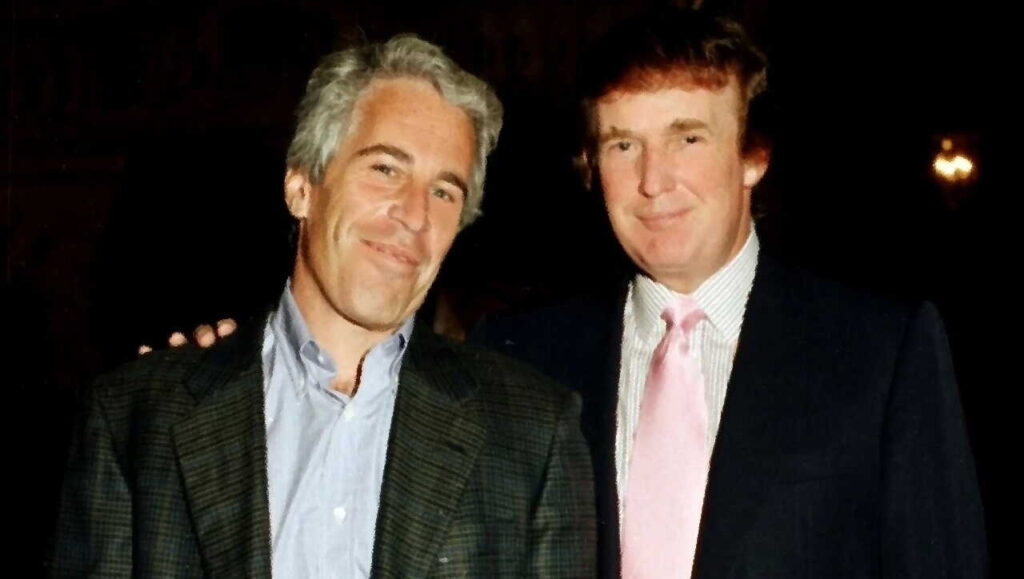
According to Sky News, the Justice Department explained that these files had previously been mistakenly labeled as “duplicates” in electronic catalogs, which is why they were not made publicly available.
For example, in Europe, it is difficult to imagine that documents relating to allegations against the head of state could “disappear” at a time of heightened public interest, only to reappear.
The White House and Trump himself dismiss these allegations as “unfounded and false” without convincing evidence. Even the Justice Department has warned that the documents may contain unverified or false statements about Donald Trump and that there are currently no official investigations into the current US president in this case.
From the outside, it all looks rather ambiguous. There is a high-profile scandal. There are the names of major figures in American politics. There are partially published files. One gets the impression that the legal machine is moving very carefully — especially carefully — when it comes to people with enormous political weight.
The European experience is far from perfect: a large number of corruption cases, high-profile resignations, and courtroom dramas. But the idea has taken root in the public consciousness that if a politician is caught up in a scandal of this magnitude, the consequences are inevitable. It may not always be a prison sentence, but it will be resignation, loss of career, or political death.
In American history, we have seen examples of harsh accountability. But the Epstein case gives a different impression. It is as if the case is being slowed down.
This is not an accusation. It is a question of perception. And this question is being asked today not only in the US.
For decades, America has exported the idea of the rule of law to the world. It has lectured on transparency, the fight against corruption, and the independence of the courts. And in many ways, rightly so. But every episode like this undermines its moral authority. Because it creates the impression that there are two levels of law: one for ordinary citizens and another for “very important people.”
Read also: Kim Kardashian and Influence Without Accountability
When documents related to Donald Trump disappear, trust declines. Or when a former president calmly states that he received a massage on board the plane of a controversial financier and thought the girl was a flight attendant, trust declines even more, even if everything is legally above board.
We may be mistaken. Perhaps the American system will ultimately prove its resilience. Perhaps the investigations will continue regardless of status. But it is not only the outcome that matters — the process itself is important. And the process currently does not look very good — it is opaque, to say the least.
This is not only detrimental to American democracy. It is dangerous for the very idea of the Western legal order. Because if a country that has long been considered a model of institutions gives the impression of selective justice.
And that, perhaps, is the main cause for alarm. Not because anyone is guilty or innocent, but because too many people around the world are convinced that if you are influential enough, the law becomes more lenient. And the United States of America is no exception.
This content reflects the author’s opinion.